
January Birth Flowers: Carnations & Snowdrops Guide
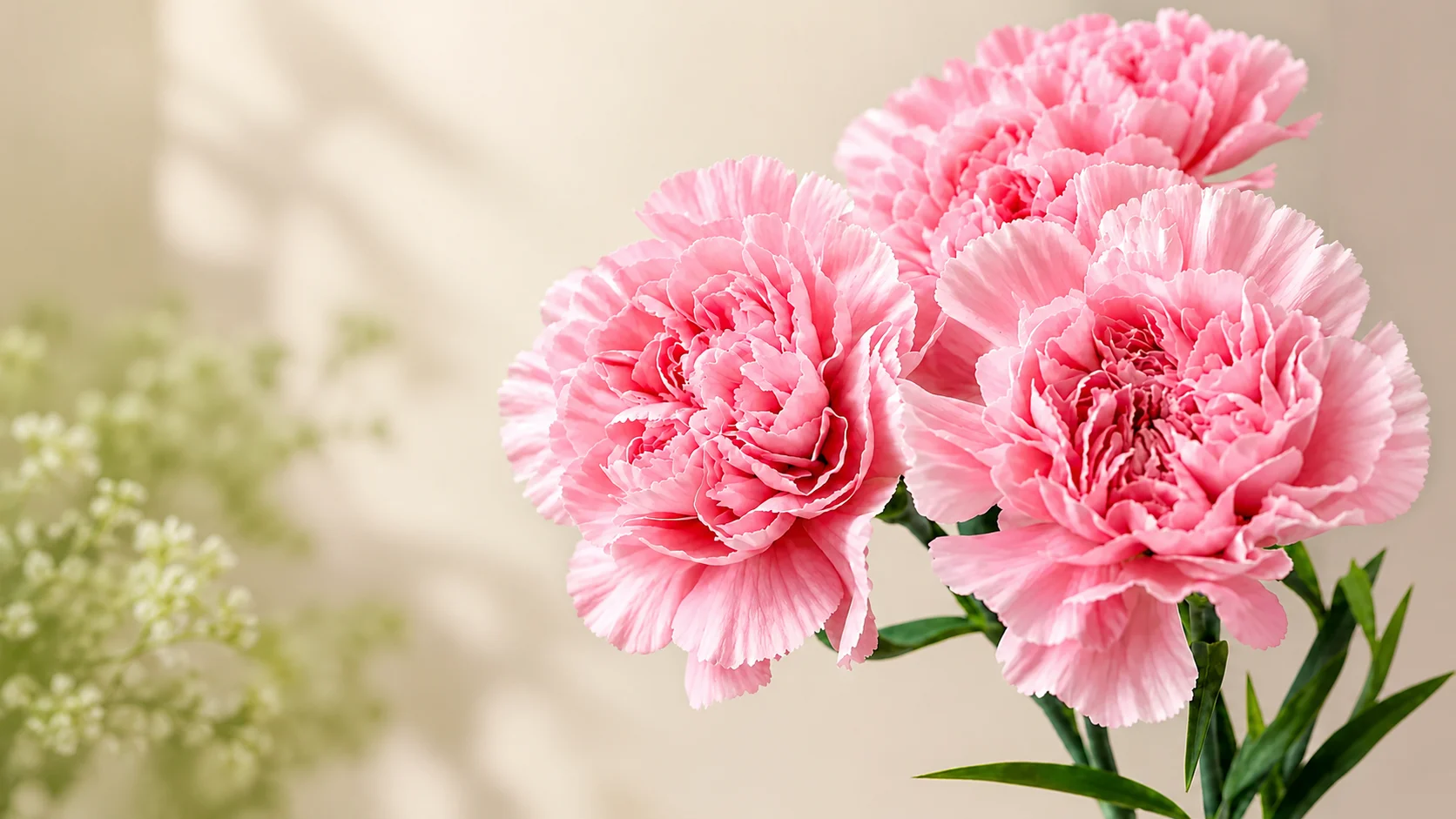
You’re scrolling through gift ideas at midnight, trying to find something for your sister’s January birthday that isn’t just another candle. Sound familiar? Here’s an idea nobody tells you about until it’s too late: flowers tied to her actual birth month. Not roses, not tulips — her flowers.
January claims two of them, and honestly, that’s kind of a nice surprise the first time you hear it. Most months get one. January gets a matched pair, and they couldn’t be more different from each other.
Why Does January Have Two Birth Flowers?
Here’s the short version. Birth flowers work a lot like birthstones — each month got assigned a bloom (or two) somewhere along the way, based on old folklore, Victorian flower symbolism, and what happened to be growing at that time of year.
Nobody sat down in one afternoon and decided this. It built up over centuries, mostly in Europe, where giving someone a flower wasn’t just decoration — it was a coded message. Different flowers said different things, and people took that seriously.
January ended up with two flowers instead of one because, frankly, one bloom couldn’t cover it. You’ve got the carnation, which is bold and available basically anywhere. And you’ve got the snowdrop, which is small, wild, and only shows up for a few weeks a year. Together, they tell a fuller story than either one could alone.
Carnation: The Primary January Birth Flower
If you ask a florist which flower “belongs” to January, they’ll say carnation without blinking. It’s the one you’ll actually find in shops, the one that shows up in birthday bouquets, and the one most people already half-recognize even if they didn’t know it had a meaning attached.
What Carnations Look Like and Where They Grow
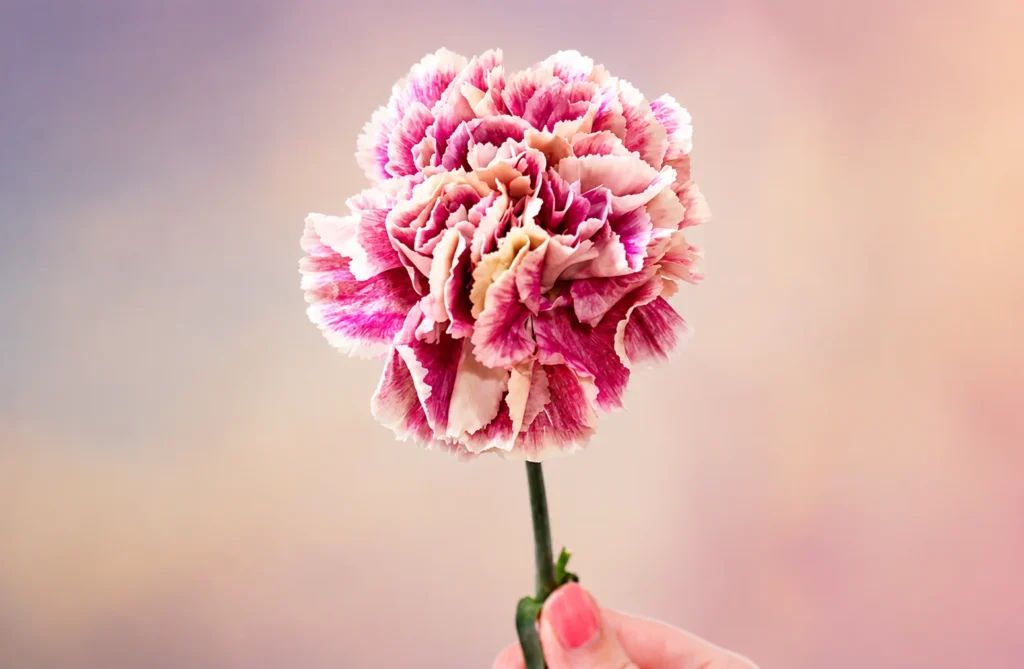
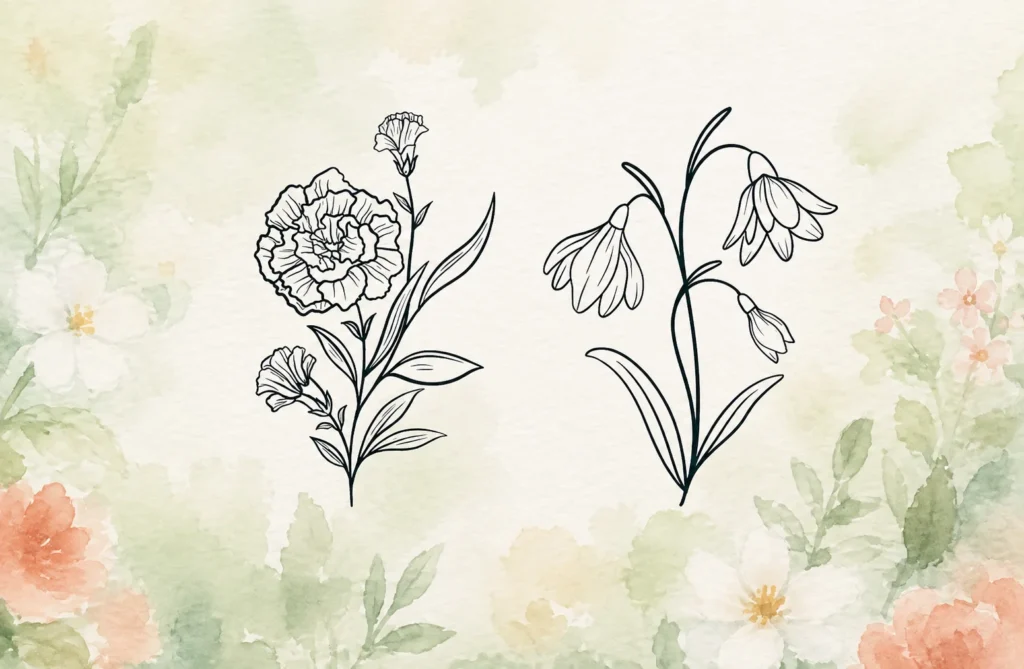
Carnations have this ruffled, almost crinkled petal structure that makes them look fuller than they really are. Pull one apart and you’ll notice the petals are layered like tissue paper, dozens of them packed into a single bloom.
They belong to the Dianthus family, and here’s a fun bit of trivia — that name comes from Greek, roughly translating to “flower of the gods.” Big claim for a flower you can pick up at a grocery store for less than a fancy coffee.
Carnations grow in a lot of places. Colombia and Kenya export them by the truckload. The Netherlands has been a carnation powerhouse for generations. Because they’re grown commercially across so many climates, you can actually buy carnations any month of the year, not just January. That’s part of why they became the “practical” birth flower — availability matters when you’re trying to gift something on short notice.
They also last. A well-kept carnation bouquet can hang around for two, sometimes three weeks in a vase. Compare that to a rose, which starts dropping petals after five or six days, and you’ll see why carnations quietly became a florist favorite even outside the birth flower conversation.
Carnation Colors and Their Individual Meanings
This is the part most articles skip, and it’s honestly the most useful bit if you’re actually buying these for someone.
Red carnations mean deep love and admiration. This is the one you send when you mean it — not a casual “happy birthday,” but something closer to “I really care about you.”
Pink carnations lean toward gratitude. There’s an old story that pink carnations first bloomed from a mother’s tears, which is why they’re still tied to motherly love and thankfulness today.
White carnations symbolize pure love and good luck. They show up a lot in winter bouquets for exactly that reason — a clean, hopeful color for the start of a new year.
Purple carnations traditionally meant capriciousness, which is a fancy old word for unpredictability. Not exactly a compliment, but it’s a fun bit of history if nothing else.
Yellow carnations used to carry a negative meaning — disappointment or rejection, believe it or not. These days most people read yellow as cheerful and friendly instead, so the old meaning has mostly faded.
Striped carnations are the odd one out. In French flower tradition, giving someone a striped carnation was actually a polite way of declining an invitation. So maybe don’t send those to a first date.
Fast Facts About Carnations
A few things worth knowing, even if you never repeat them at a party:
Carnations are technically edible. They have a mild, slightly peppery taste, and some bakeries use the petals to decorate cakes.
They’ve been cultivated for over 2,000 years, tracing back to ancient Greece and Rome, where people wove them into ceremonial garlands.
The name “carnation” is thought to come from the Latin word for flesh, likely referring to their original soft pink shade before growers bred all the other colors we see now.
The red carnation happens to be the national flower of Spain, which tells you something about how far its symbolism travels.
Snowdrop: The Secondary January Birth Flower
Now here’s where things get interesting. Snowdrops are almost the opposite of carnations in every way — small, wild, hard to find in a shop, and only around for a short window each year.
What Makes Snowdrops Special
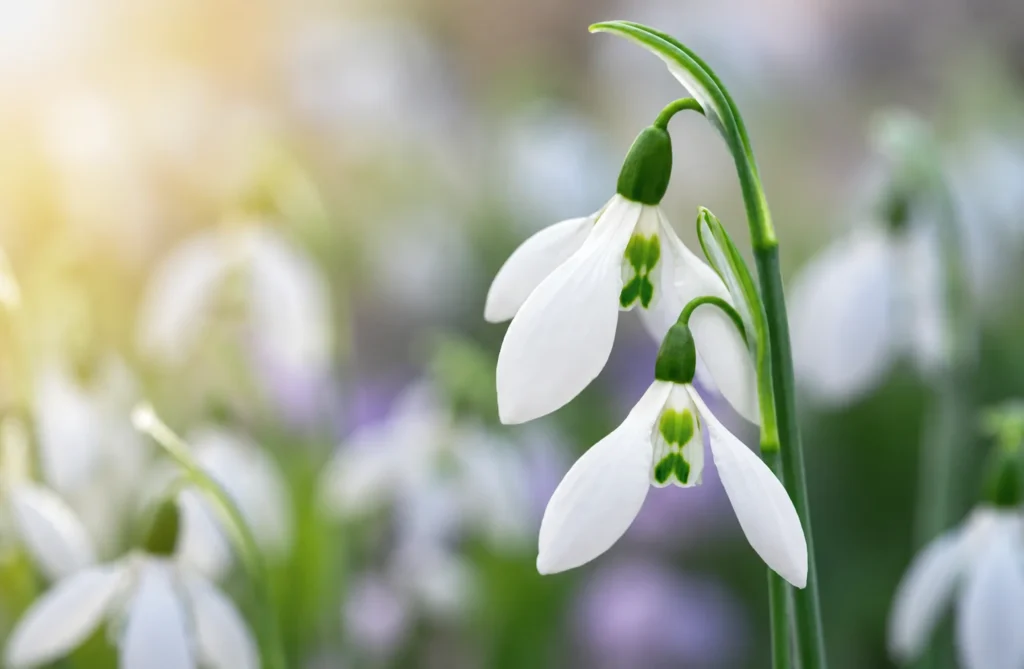
A snowdrop is a tiny, bell-shaped white flower that droops toward the ground, almost like it’s shy. What makes it remarkable isn’t how it looks though — it’s when it blooms.
Snowdrops are one of the very first flowers to appear after winter, sometimes pushing straight up through actual snow. There’s something almost stubborn about that. While everything else is still frozen solid, this one small flower decides it’s had enough of winter and shows up anyway.
That timing is exactly why it got linked to January. It’s proof, in plant form, that the cold doesn’t last forever.
Snowdrop Symbolism
Snowdrops are tied to hope, rebirth, and fresh starts. Which, if you think about it, fits perfectly with a flower assigned to the first month of the year.
In Victorian England, giving someone a snowdrop was basically a way of saying “hang in there, better days are coming.” It wasn’t a romantic gesture like a red carnation. It was more of a quiet, comforting one.
A Few Things to Know Before Buying Snowdrops
Here’s the catch — you probably can’t just walk into a florist and buy a snowdrop bouquet. They’re delicate, they wilt fast once cut, and in several countries, including the UK, picking wild snowdrops is actually illegal because certain species are endangered.
So if you want to include snowdrops in a January birthday gift, skip the cut-flower route entirely. Look for a potted snowdrop bulb instead. It’ll keep blooming every winter for years, which honestly makes it a better gift than a bouquet that wilts in a week anyway. While snowdrops are closely associated with January, the February Birth Flower has its own special charm and symbolism, making it a meaningful choice for anyone celebrating a February birthday.
Carnation vs. Snowdrop: Quick Comparison
| Carnation | Snowdrop | |
| When it blooms | Year-round, commercially grown | Only in late winter |
| Where you’ll find it | Nearly any florist or grocery store | Rarely sold, mostly grows wild or as bulbs |
| What it means | Love, admiration, distinction | Hope, rebirth, resilience |
| How long it lasts cut | 2 to 3 weeks | Not typically sold as a cut flower |
| Best gift format | Bouquet or arrangement | Potted bulb |
How to Choose Between the Two for a Gift
If you need something today, go with carnations. They’re everywhere, they last, and the color meanings give you a way to say something specific without writing a card that sounds cheesy.
If you want something with a bit more sentiment behind it, a potted snowdrop bulb is the move. It’s not as convenient — you’ll need to actually plant it and wait — but it comes back every January, which turns a one-time gift into a small yearly tradition.
And if you can’t decide? A lot of florists now build mixed arrangements that pair carnations with small white filler flowers to nod at the snowdrop, since true snowdrops rarely make it into a vase. It’s not a perfect substitute, but it gets you both meanings in one bouquet.
January Birth Flowers and Personality
January sits under two zodiac signs, Capricorn and Aquarius, both known for being stubborn in the best way — determined, independent, not easily talked out of anything once they’ve made up their mind.
The birth flowers echo that pretty well. Carnations lean into loyalty and admiration. Snowdrops lean into resilience, the ability to keep going even when conditions are rough. Put those together and you get a personality sketch that’s protective, a little tough, and deeply loyal once someone earns their trust.
Is that scientifically accurate? Of course not. But it’s a fun lens to view a birthday through, and it makes for a genuinely sweet card message if you’re stuck on what to write.
The Bottom Line on January’s Two Flowers
Carnations and snowdrops make an odd pair on paper, but they work because they cover two different needs. One is loud, colorful, and easy to grab on your way home. The other is quiet, seasonal, and a little bit rare.
If you’re shopping for a January birthday this year, you don’t have to pick just one meaning. Grab the carnations for right now, and if you really want to make someone’s day, tuck a snowdrop bulb in alongside it — something that’ll remind them of this birthday every winter after.


One Comment