
The language of birth months
Every birth month has its own bloom.
From January’s carnation to December’s narcissus, each flower carries its own meaning, season, and story. Find yours — then read what it says about you.
A little ritual for your birthday
Find Your Birth Flower
Tell us your birthday. We’ll show you your flower, your zodiac sign, and your birthstone — all in one bloom.
Please choose both a month and a day.
Birth Flowers by Month: Meanings, Zodiac & Birthstones
Everyone knows their birthstone. A lot of people know their zodiac sign too. But did you know you also have a birth flower?
Birth flowers are a sweet, old tradition. Each month of the year has its own flower, and that flower comes with its own meaning, its own story, and its own personality. Some people say your birth flower says something about who you are, just like your star sign does.
In 2026, birth flowers are having a real moment. You'll see them on jewelry, on birthday cards, in tattoo designs, and all over Pinterest boards. But most guides only tell you the flower name and stop there. They don't tell you how it connects to your zodiac sign or your birthstone.
This guide is different. Here, you'll find your birth flower, its meaning, the zodiac sign tied to your month, and the birthstone that goes along with it. All in one place. No jumping between five different websites.
Let's find your birth flower.
Birth Flowers For Each Month
January Birth Flowers — Carnation
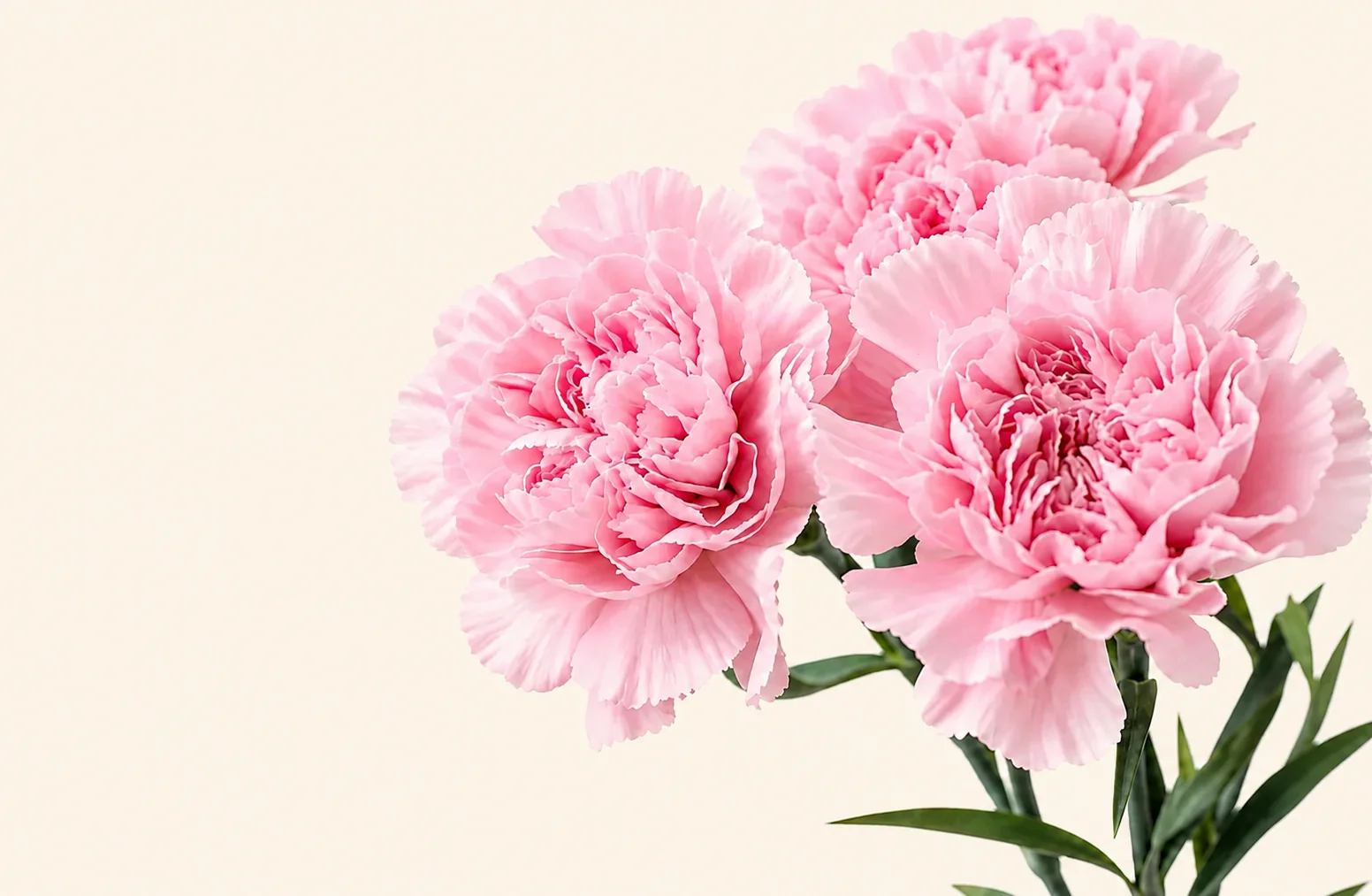
If you were born in January, your birth flower is the carnation.
Carnations are tough little flowers. They can handle cold weather and still look beautiful. That toughness is part of why people connect carnations with admiration and lasting affection. A carnation doesn't fade fast. It sticks around, just like the people born under it tend toJanuary is ruled by Capricorn, a sign known for being steady and hardworking. That fits the carnation well. Both are built to lastJanuary's birthstone is the garnet, a deep red stone. Garnet and carnation share that same rich, warm color, which makes the pairing feel natural.
February Birth Flowers — Violet

February's birth flower is the violet.
Violets are small. You could walk right past one and not notice it. But that's kind of the point. Violets have long stood for modesty and quiet loyalty. They don't need to be the biggest flower in the garden to matterFebruary falls under Aquarius, a sign known for thinking differently and staying true to itself, even quietly. That matches the violet's understated charm.The birthstone for February is amethyst, a purple stone tied to calm thinking and clarity. It's a fitting partner for a flower that's easy to overlook but hard to forget once you notice it.
March Birth Flowers — Daffodil

March's birth flower is the daffodil, and it might be the most hopeful flower on this whole list.
Daffodils are usually the first flowers to push up through the cold ground at the end of winter. That's why they've become a symbol of new beginnings and fresh starts. Seeing a daffodil feels like a promise that spring is really coming.Late March belongs to Aries, a sign known for jumping in first and starting things. Daffodils do exactly that in nature.March's birthstone is aquamarine, a pale blue-green stone that reminds people of clear skies and calm water. Together, the daffodil and aquamarine feel like the start of something good.
April Birth Flowers — Daisy

April's birth flower is the daisy, one of the most recognizable flowers there is.
Daisies are simple and honest looking. White petals, yellow center, no fuss. That simplicity is exactly why daisies have long stood for innocence and new love. There's nothing hidden about a daisy. What you see is what you get.April sits between Aries and Taurus, two signs known for being direct and straightforward. The daisy fits right inThe birthstone for April is the diamond, a stone valued for being clear and flawless. Like the daisy, it doesn't hide anything either.
May Birth Flowers — Lily of the Valley

May's birth flower is lily of the valley, a flower with tiny, bell-shaped blooms and a big reputation.
Despite being so small, lily of the valley carries a meaning of sweetness, humility, and the return of happiness. In some old stories, it was even believed to bring good luck to whoever found it bloomingMay belongs to Taurus, a sign known for being grounded and appreciating simple pleasures. That matches this quiet, sweet little flower perfectly.May's birthstone is emerald, a green stone linked to renewal and growth, which fits right in with springtime blooming.
June Birth Flowers — Rose

June's birth flower is the rose, and honestly, it doesn't need much of an introduction.
The rose is probably the most famous flower in the world. Most people already connect it with love. But roses actually carry different meanings depending on their color. Red means romantic love. Yellow means friendship. Pink means gratitude and admiration. White means new beginningsJune covers both Gemini and Cancer, two signs known for having a lot of heart and a lot of layers, much like a rose itselfJune's birthstone is the pearl, formed slowly over time inside an oyster. Like the rose, it takes patience to become something beautiful.
July Birth Flowers — Larkspur

July's birth flower is larkspur, a tall flower with spiky clusters of blooms.
Larkspur is tied to lightness, positivity, and an open heart. It grows upward and outward, almost like it's reaching for something. That's why it's often linked to a sense of freedom and a joyful spirit.July sits between Cancer and Leo, two signs known for warmth and big feelings. Larkspur's bold, cheerful color matches that energy well.The birthstone for July is ruby, a deep red stone known for its intensity, much like larkspur's own vivid colors.
August Birth Flowers — Gladiolus

August's birth flower is the gladiolus, and its name actually comes from the Latin word for sword.
That's because gladiolus flowers grow tall and straight, like a blade pointing toward the sky. This shape is why the flower has become linked with strength, integrity, and standing firm in who you are.August belongs to Leo, a sign known for confidence and boldness. The gladiolus, tall and unmissable in any garden, fits that personality well.August's birthstone is peridot, a bright green stone that, like the gladiolus, doesn't try to blend in.
September Birth Flowers — Aster

September's birth flower is the aster, a star-shaped flower that blooms later in the year than most.
Because it waits until late summer to bloom, the aster has long been linked with patience and wisdom. It doesn't rush. It shows up exactly when it's supposed to, which is part of why people admire it.September falls under Virgo, a sign known for thinking things through carefully. That patience matches the aster's own timing perfectly.The birthstone for September is sapphire, a deep blue stone that has been prized for centuries for its calm, steady beauty.
October Birth Flowers — Marigold

October's birth flower is the marigold, a flower known for its warm, golden-orange color.
Marigolds last a long time once cut, and they're often linked with creativity and warmth that doesn't fade quickly. In many cultures, marigolds are also used in celebrations, which adds to their cheerful reputation.October belongs to Libra, a sign known for loving beauty and balance. The marigold's bright, warm color brings exactly that kind of joy.October's birthstone is opal, a stone known for shifting colors depending on the light, which mirrors the marigold's own many-layered petals.
November Birth Flowers — Chrysanthemum

November's birth flower is the chrysanthemum, and it might be the most varied flower on this entire list.
Chrysanthemums come in so many shapes, sizes, and colors that it's hard to keep track. That variety is part of why the flower is linked with joy, honesty, and a long, full life.November falls under Scorpio, a sign known for depth and intensity. The chrysanthemum, with its many layers and hidden petals, matches that complexity well.The birthstone for November is citrine, a warm golden stone that fits right in with the chrysanthemum's late-autumn bloom.
December Birth Flowers — Narcissus
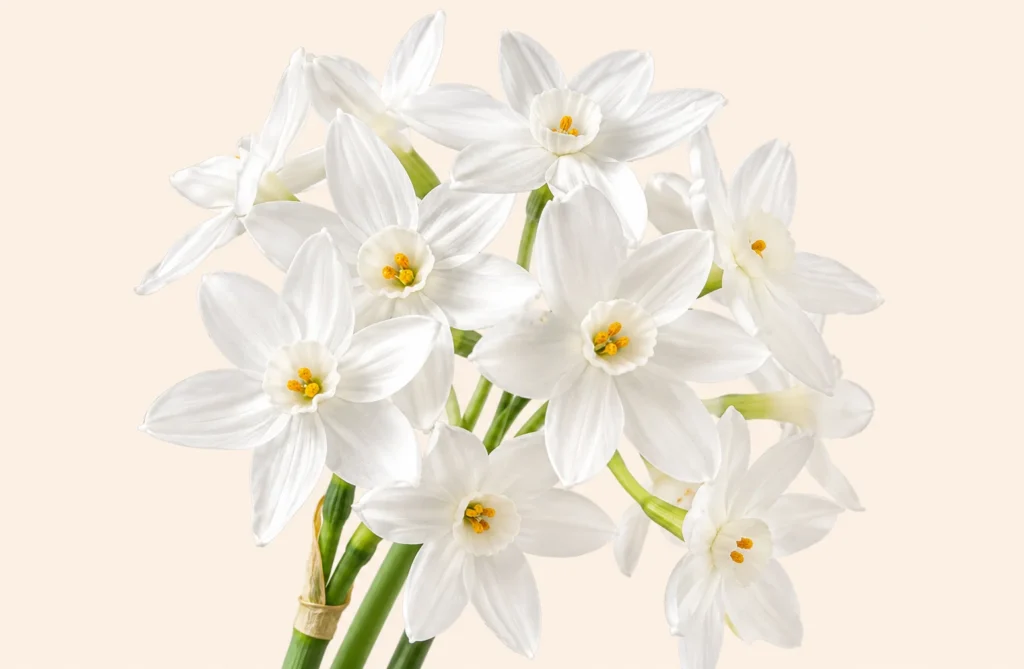
December's birth flower is the narcissus, often seen in its paperwhite form.
Narcissus flowers are known for blooming even in the coldest part of the year, which is why they've come to represent hope and good fortune. It's a fitting flower to end the year on, a small reminder that good things can bloom even in winter.December belongs to Sagittarius, a sign known for optimism and looking ahead. The narcissus, blooming through the cold, carries that same hopeful spirit.December's birthstone is turquoise, one of the oldest stones used in jewelry, closing out the year with a color as distinct as the flower itself.
What Makes This Guide Different
Most birth flower guides give you a name and a one-line meaning, then send you somewhere else to learn about your zodiac sign or birthstone.
This guide brings all three together, month by month, because they were always meant to be read as a set, not as separate pieces. Your birth flower, your zodiac sign, and your birthstone all come from the same slice of the calendar, and they tell a fuller story when you look at them side by side.
Each month above is just the beginning. Every flower here has a deeper history, more detailed meanings, and personality traits worth exploring, along with simple tips if you ever want to grow one yourself.


